SSV Staking
2/23/26
The road to cSSV: What is Composable-SSV?
Composable-SSV (cSSV) is the liquid representation of your staked position, keeping governance power while earning a share of ETH-denominated SSV Network fees. Learn how cSSV accrues ETH rewards, stays transferable, and becomes usable across DeFi.
In a previous post, we explained how SSV’s next proposed upgrade works under the hood: ETH-denominated fees, effective balance oracles, and SSV Staking. That was followed by how the protocol can put network fees to work and how the SSV DAO can transform the SSV token into an ETH accrual token. Today, we focus on how stakers interact with SSV staking as an SSV holder, mainly what Composable-SSV (cSSV) is, and why it matters for the SSV community.
Introducing cSSV

Ethereum staking has matured considerably since the genesis of the Beacon chain. We now have new staking tokens, restaking layers, and new opt-in services for validators like base-sequencing and preconfirmations. All of this innovation has helped make validators and stakers more productive and, as a result, increase their rewards.
What has been missing is a clean way for non-ETH token holders to earn ETH directly from participating in core protocol functions that support Ethereum’s consensus layer outside of traditional staking.
SSV Staking and cSSV are designed to unlock exactly that.
In short, cSSV is the liquid representation of your staked SSV position. Instead of forcing stakers to choose between supporting protocol governance and earning ETH rewards, cSSV lets you do both simultaneously.
Making SSV composable
The cSSV token’s naming is not random. The idea is to make SSV composable - hence cSSV. Composable with governance, staking, and DeFi. That means your SSV can remain tied to governance and protocol security, while becoming a token you can plug into the broader onchain economy. In simple terms, SSV is leveling up, and cSSV is how your stake becomes composable without giving up exposure to the protocol.
Holding cSSV
The cSSV token represents an SSV stakers position in the SSV Staking contract, acting as a receipt that makes holders eligible to receive a share of ETH-denominated fees generated by the SSV Network in proportion to their staked position. Holding cSSV means three things:
Holders are aligned with the protocol, their stake backs effective balance oracles while being able to participate in governance.
Stakers are entitled to a portion of ETH-denominated fee flows that the protocol collects from validator clusters.
cSSV can be used as collateral, liquidity, or a building block in DeFi strategies.
From a technical point of view, cSSV is a standard ERC-20 token. The token’s accrual design is compatible with some DeFi protocols (e.g., Pendle). Internally, the staking contracts use reward indices to keep track of how much ETH each unit of cSSV is entitled to, based on the protocol’s fee income.
How does cSSV work?
Q: If my wallet holds cSSV, how do I earn and claim rewards?
A: The wallet address holding cSSV earns ETH yield. You must claim rewards using the same address that holds/held the cSSV.
Q: Do I need to unstake to claim rewards?
A: No. Unstaking is not required to claim rewards; they can be claimed anytime, except during the claim cooldown period.
Q: Who can initiate an unstake?
A: The wallet currently holding the cSSV can initiate an unstake, even if the cSSV was transferred to it.
Q: Are cSSV tokens transferable?
A: Yes, cSSV tokens are transferable.
Q: If I transfer cSSV to another wallet (or vault), do ETH rewards start accruing to the new holder?
A: Yes. Rewards accrual is indexed to the account currently holding the cSSV. Previously earned rewards remain claimable by the wallet that earned them, even after a transfer.
Q: Can I deposit cSSV into a vault?
A: Technically yes, but the vault would need custom logic to split rewards among the different SSV stakers in the vault.
Q: How does cSSV affect voting power and oracle delegation?
A: cSSV represents your stake and corresponding voting power. Voting power is split evenly across active oracles and delegated to them.
Q: What happens to voting power if I transfer cSSV to someone else?
A: The voting power moves with the cSSV. A proportional share of your oracle delegations is removed from you and added to the recipient.
Q: What happens to voting power when I request to unstake?
A: Requesting to unstake removes a proportional share of voting power from your delegated oracles.

Benefits for SSV Holders and the Community
For SSV holders, the most obvious benefit of cSSV is that SSV becomes a productive asset. Instead of holding a token that only confers governance rights, you hold an ETH accrual token.
Over time, these capabilities can deepen the SSV community’s involvement in DeFi. Liquidity pools built around cSSV and SSV can make it easier for new users to enter and exit positions. Money markets that accept cSSV as collateral can unlock capital for builders and operators who want to keep their SSV staked but still need access to liquidity.
Benefits for the Protocol and Tokenomics
Routing protocol fees to cSSV holders improves tokenomics in several ways. It creates a direct link between network usage and token utility: when more validators use SSV Network, fee income grows, and cSSV holders see higher ETH rewards.
Staking also reduces the immediate liquid supply of SSV. Tokens that are staked and represented as cSSV are still transferable, but they carry an opportunity cost if sold. Selling out of your position means giving up future ETH rewards and potentially your governance influence. This tends to favor long-term, aligned holders over short-term speculation.
What This Means for the Future of SSV
Introducing cSSV is a key step in evolving SSV from a pure governance and payment token into an ETH-accruing asset. It aligns the incentives of SSV holders, node operators, and the protocol itself around real network usage. It gives the community a direct reason to care about validator adoption, operator performance, and protocol health, because all of those factors feed into the staking mechanism.
It also positions SSV within the broader staking and DeFi ecosystem. As Ethereum continues to innovate with infrastructure protocols that can tie their tokens to real ETH flows will stand out. cSSV is designed to do exactly that for SSV.
Next Steps and How to Get Involved
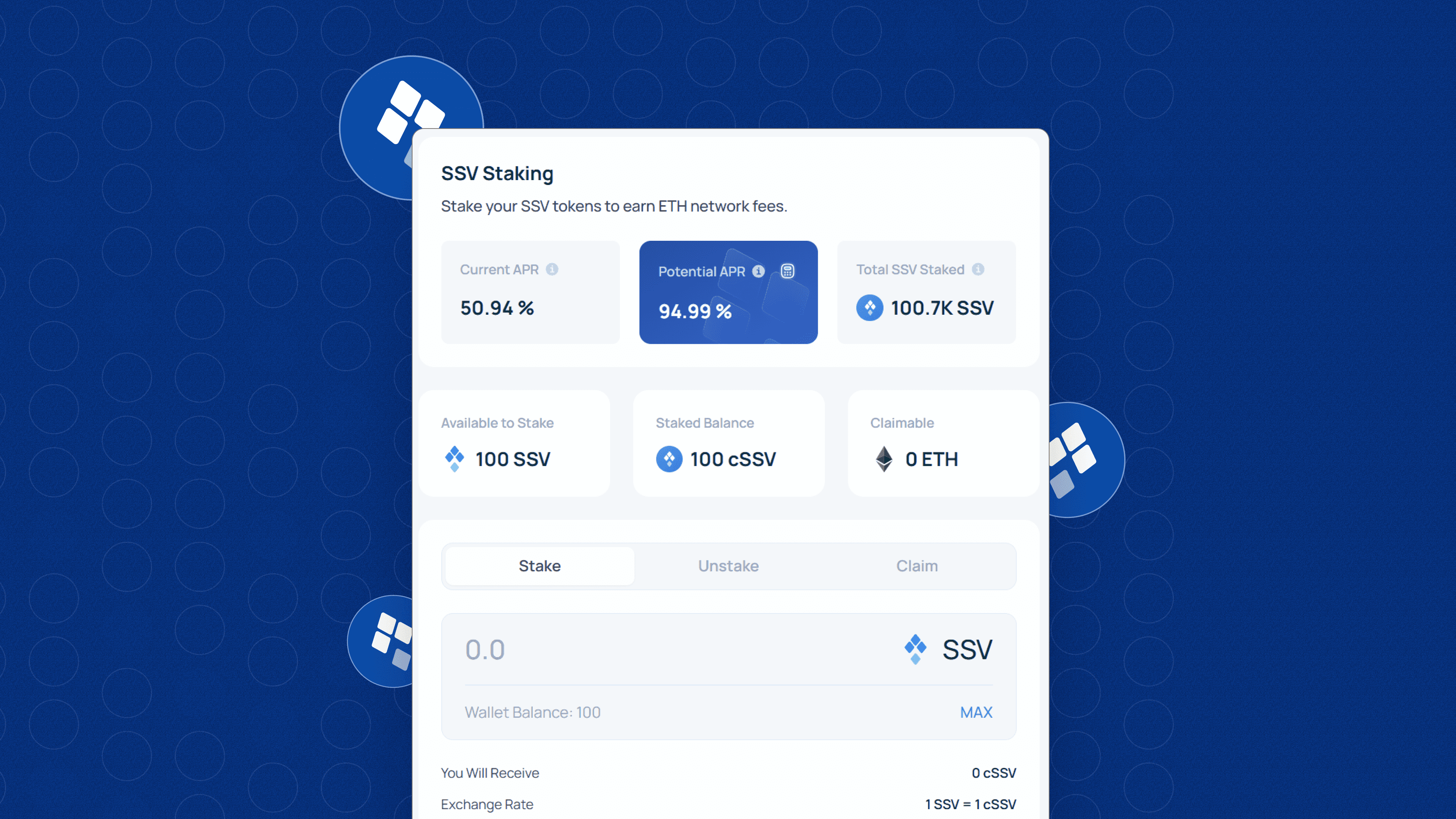
If you are an SSV holder, cSSV gives you a new way to engage with the protocol. As SSV Staking and cSSV move toward testnet and mainnet, you will be able to review the staking docs, experiment with cSSV in a safe environment.
If you are a node operator or validator service, now is the time to think about how staking your SSV and holding cSSV can improve your economics. You can model how ETH rewards from cSSV would offset your operational fees and consider how cSSV could be integrated into your treasury management.
If you are a DeFi protocol, cSSV opens the door to a new class of ETH-backed yield. You can begin evaluating how cSSV can fit into your collateral frameworks, pool designs, or structured products.
As the design is finalized and the implementation moves forward, more concrete guides and “how to stake” instructions will follow. For now, the important part is understanding what cSSV represents: a liquid way to support SSV Network, earn ETH, and bring that value into the broader DeFi ecosystem.
Disclaimer: The above represents a vision for the future of SSV Network and is subject to approval by the SSV DAO.